Bouquet in the Church and for the Clergy
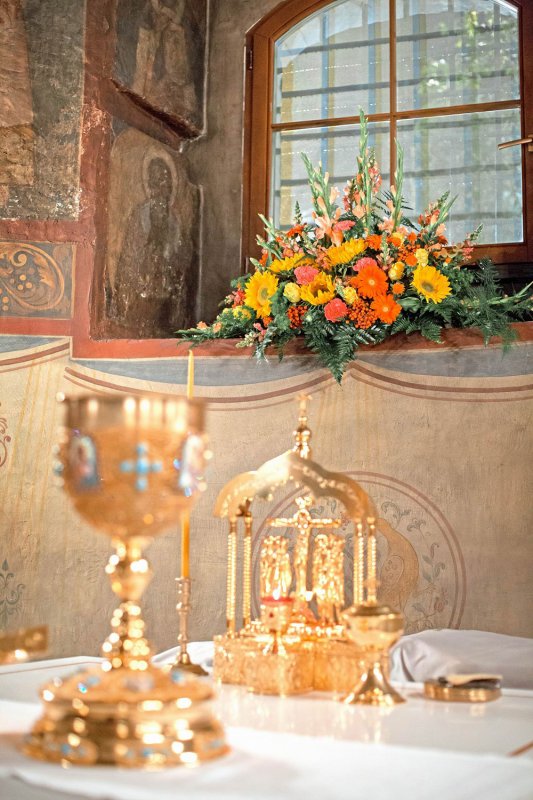
Bringing flowers to the church is an ancient pious tradition that dates back deep into the past. They are an expression of our sincere gratitude to the Lord, the Mother of God, and the saints. The offering of flowers in the church is also associated with the desire to adorn the place where prayers and festive services are held. The beauty of flowers reminds us of the perfection of the Kingdom of Heaven, of the heavenly garden. The wilting of flowers reminds us that our earthly life is temporary. However, it is important to remember that in the church, flowers are not the main focus. The House of God is not a greenhouse; it is where church rituals and services are performed. In Orthodox churches, everything is governed by church regulations and canons.
The floral decoration in Orthodox churches significantly differs from other Christian denominations.
In a Catholic church, lavish decor also includes rich floral arrangements. In churches in England and Germany, flower exhibitions and harvest festivals are often held, dictating the methods of floral decoration. In Orthodox churches, church floristry has a completely different character, subordinated to the presence of God and the worshippers. Special attention is given to adorning with flowers the revered festive icons, the epitaphios, the altar, the eagle rug, the processional cross, and the candle holders. It is essential to maintain the visibility of beautiful elements of architectural decor.
Everything in the church is harmonious and unified. Each church holiday has its designated color for the vestments of the clergy. This is taken into account by parishioners when choosing the color of plants and the composition of floral arrangements. For example, on Christmas, Sundays, holidays of the hierarchs, prophets, and apostles, golden or yellow colors are used. Green colors are used on Trinity Sunday, Pentecost, Palm Sunday, as well as on the days commemorating the venerable and fools-for-Christ. For all feasts of the Mother of God, blue or white vestments are used, while for the Ascension and Transfiguration, white is used. Red colors are used on the days commemorating martyrs, and in the Week of the Veneration of the Cross, the colors are dark red and violet. Dark tones are used during fasting periods.
On a regular calendar day in the church, there are no strict limitations on the types of flowers. The main thing is our sense of gratitude and sincere love for God. It is important that floral compositions emphasize the reverence of the faithful, the beauty of icons, and the deep meaning of religion, rather than being bright and flashy accents. The issue of fragrance should also be considered. It is not recommended to use flowers with strong, sharp scents. Flowers should be live (not artificial), not withered, and fresh. Chrysanthemums, peonies, calla lilies, dahlias, asters, cinerarias, hydrangeas, begonias, azaleas, amaryllises, as well as wildflowers such as primroses and lilies of the valley, are most appropriate and harmonious with each other.
For centuries, Orthodox believers lovingly adorned churches with flowers and trailing plants, gathered from the fields, grown in their gardens, or bought at the market or store, and in winter, made by hand from silk, crepe, and velvet. Over the centuries, a distinct Orthodox approach to the selection and combination of flowers has evolved. Each church holiday has its own characteristics in floral decoration.
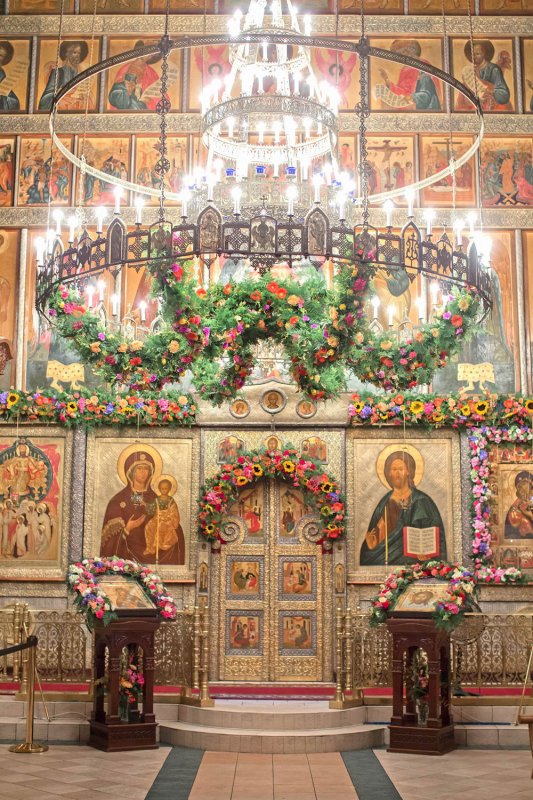
When choosing flowers for a bouquet in the church, preference is given to those depicted in icons, in church paintings and ornaments, and also mentioned in the Bible.
For Christmas compositions, chrysanthemums, baby's breath, white lilies, and roses are used, symbolizing heavenly love and purity. Fragrant fir branches can be added. The evergreen fir symbolizes the tree of life that was restored to us with the Birth of the Savior.
For the Feast of the Epiphany, white is used as the main color, symbolizing spiritual light and purity. All church decorations should remind of cleansing, renewal, and rebirth.
On Good Friday, the shroud of the Savior is adorned with pure white flowers, symbolizing spiritual light and purity, and they also decorate the church and the icon of the Transfiguration of the Lord.
The Entry of Jesus Christ into Jerusalem marks Palm Sunday. The joyful inhabitants of the city held palm branches in their hands to welcome Him. Therefore, they became the symbol of the holiday. Since palms are much less common in our region, they are replaced with willow branches. On this day, believers decorate the church with blooming willow branches and bring twigs with fluffy ball-shaped flowers of this plant for blessing.
Red-hued flowers, such as roses and carnations, predominate in decorations after Palm Sunday. They are a sign of the approaching Passion of Christ. White lilies are used for the Annunciation, symbolizing this feast. They are placed near the festive icon of the Archangel Gabriel, who brought the Good News. White lilies, symbolizing purity and immaculateness, also adorn the shroud on the Dormition of the Mother of God. In the church on feasts of the Mother of God, besides white, flowers of blue and blue shades are used. They symbolize love for the Queen of Heaven.
For the Bright Resurrection of Christ, compositions of carnations, gerberas, lilies, roses, and chrysanthemums are brought, reflecting the joyful celebration of Christians on this day. Bright red-orange tones are characteristic of the Easter bouquet, filling the hearts of the faithful with joy.
On Trinity Sunday, the bouquet is dominated by green, symbolizing hope and life, spiritual spring. The church floor is covered with meadow grass and the leaves of young birch trees.
A simple bouquet of wildflowers, such as daisies, cornflowers, poppies, and yellow tansy, is gathered. On this day, parishioners bring various medicinal plants for worship and blessing: lemon balm, mint, savory, and tansy.
There is a belief among the people that the medicinal herbs gathered on Trinity Sunday protect against evil spirits, unclean forces, and guard against illnesses.
There are plants that are not customary to bring to the church. Primarily, these are plants with thorns and prickles: acacia, hawthorn, blackthorn, and wild rose. Thorns are removed from roses before using them for church decoration. Similarly, cacti and prickly agaves are unacceptable. Poisonous and so-called "magical" or "bewitching" plants, used in spells, incantations, and cult rituals, are not allowed in the church. These include hemp, hogweed, white hellebore, henbane, and bugbane. Flowers with a strong sweet or narcotic scent are not used: some types of lilies, jasmine, elderflower branches, anything that overpowers the unique scent of the Orthodox church.
What Flowers to Give to a Clergy Member
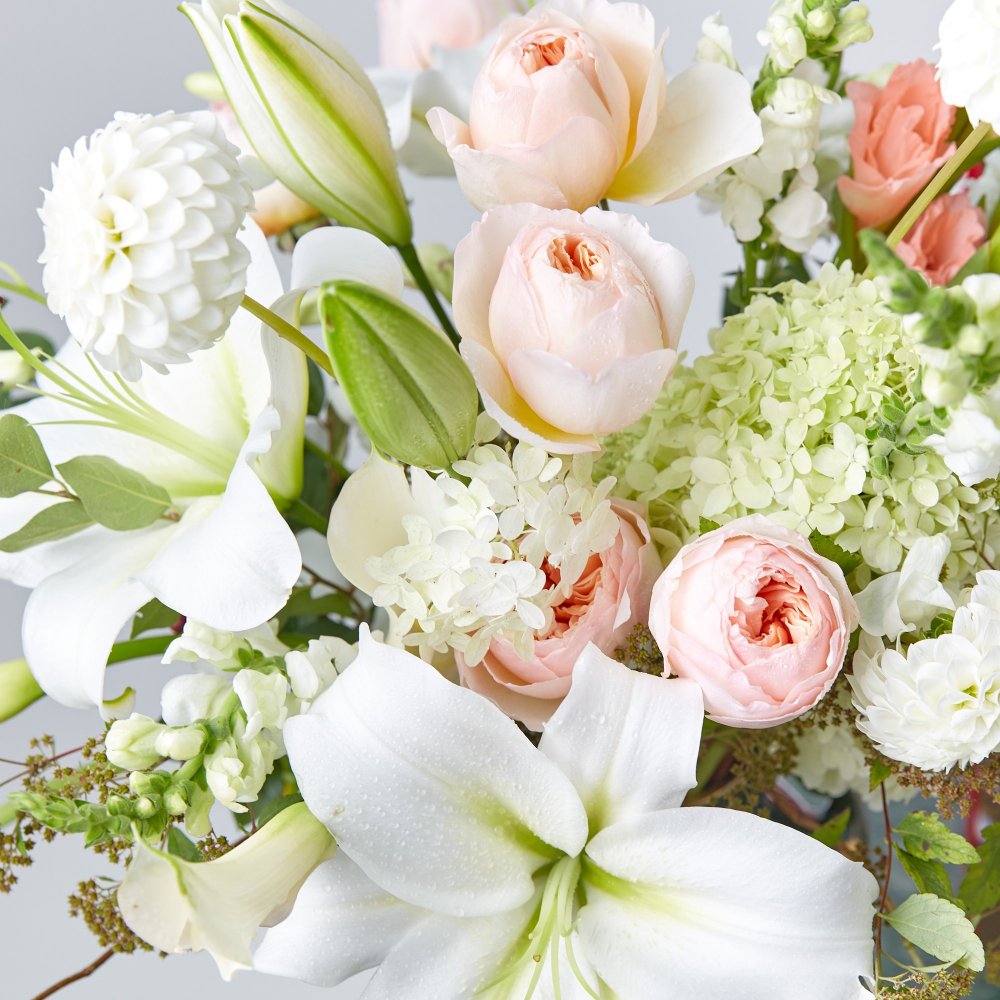
Congratulating a priest on a church or personal holiday is a normal desire of parishioners. When choosing flowers, it is important to remember that a clergy member is just like any one of us.
Roses are the best choice for a clergy member - they are fragrant and vibrant. Such a bouquet can be given for name days, birthdays, Christmas, Easter, patron saint days, or church holidays. A rose is ideal for gifting to bishops. Carnations can also be an excellent gift! Lilies emphasize a person's devotion to the clergy member and symbolize peace. The Archangel Gabriel appeared with a lily to the Virgin Mary. White lilies symbolize the Mother of God. Yellow roses symbolize the sun and light, white roses, carnations, white or yellow chrysanthemums, greenery, and ribbons - symbols of Christ.
A clergy member can be given not only tulips but also chrysanthemums of different colors.
They have always been a gift for authoritative, brave, and virtuous men with pure souls, and clergy members can also receive such flowers to remind them of their great calling. Chrysanthemums symbolize the sun, peace, and life. A bouquet of chrysanthemums is suitable for a clergy member's birthday or other holidays. Dahlias express boundless wisdom, the purity of sunlight, life force, and gratitude. This unique flower can be given to a clergy member individually or as part of a bouquet.
Presenting a bouquet of flowers to a clergy member is like saying to them, "Your service adorns the Holy Church, fragrant like these flowers, and inspires the faithful with the example of your spiritual life."