Business bouquet for a business partner: rules and exceptions
In business, such a "trifle" as a bouquet of flowers can either turn into a very big problem or help in business negotiations.
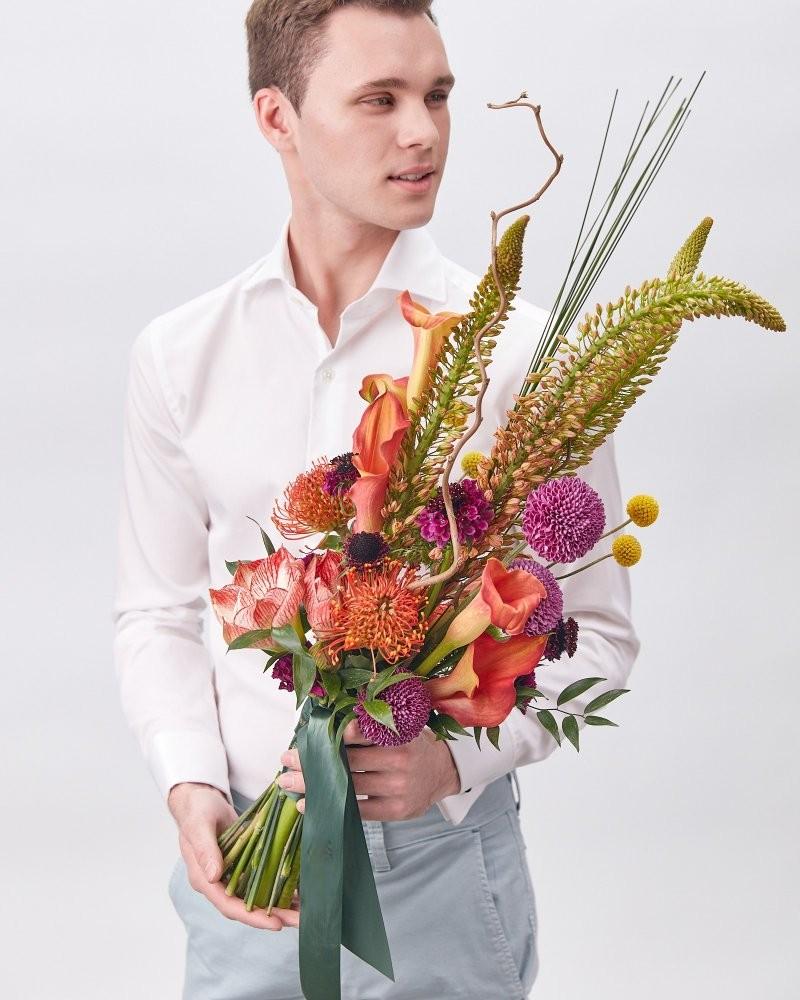
Many factors need to be taken into account: gender, age, position, personality, nationality, possible allergy to flower pollen, and even the partner's physique – indeed, a stout man with a bunch of delicate forget-me-nots would look out of place. Moreover, a short man "loaded" with a huge bouquet would look even more comical... In short, "floral communication" in the business world is a whole science.
A correctly chosen bouquet is an impressive and effective way to create a good atmosphere in negotiations and establish trusting relationships with a partner. However, here one must consider not only the requirements of floral etiquette but also business etiquette, as well as the nuances of floral traditions in different countries.
If you present chrysanthemums to a Hungarian partner during negotiations, consider that you have made a mistake: for a Hungarian, these are "funeral" flowers, just like carnations are for an American, and white asters and lilies are for a Swede. However, a Japanese person would be pleased with chrysanthemums.
It is better not to give red roses to a German or Mexican: in Germany, they are only given as a sign of passionate love, while for Latin Americans, a red rose is a symbol of blood and death. Red flowers would be appreciated by a Turk or a Chinese, especially if the bouquet is "spiced up" with decorative greenery. Just do not give a Turk a bouquet of white and blue flowers – in Turkey, this color combination signifies sadness...
The choice of bouquet shape is also important. A European is more accustomed to a bouquet in a traditional round shape, 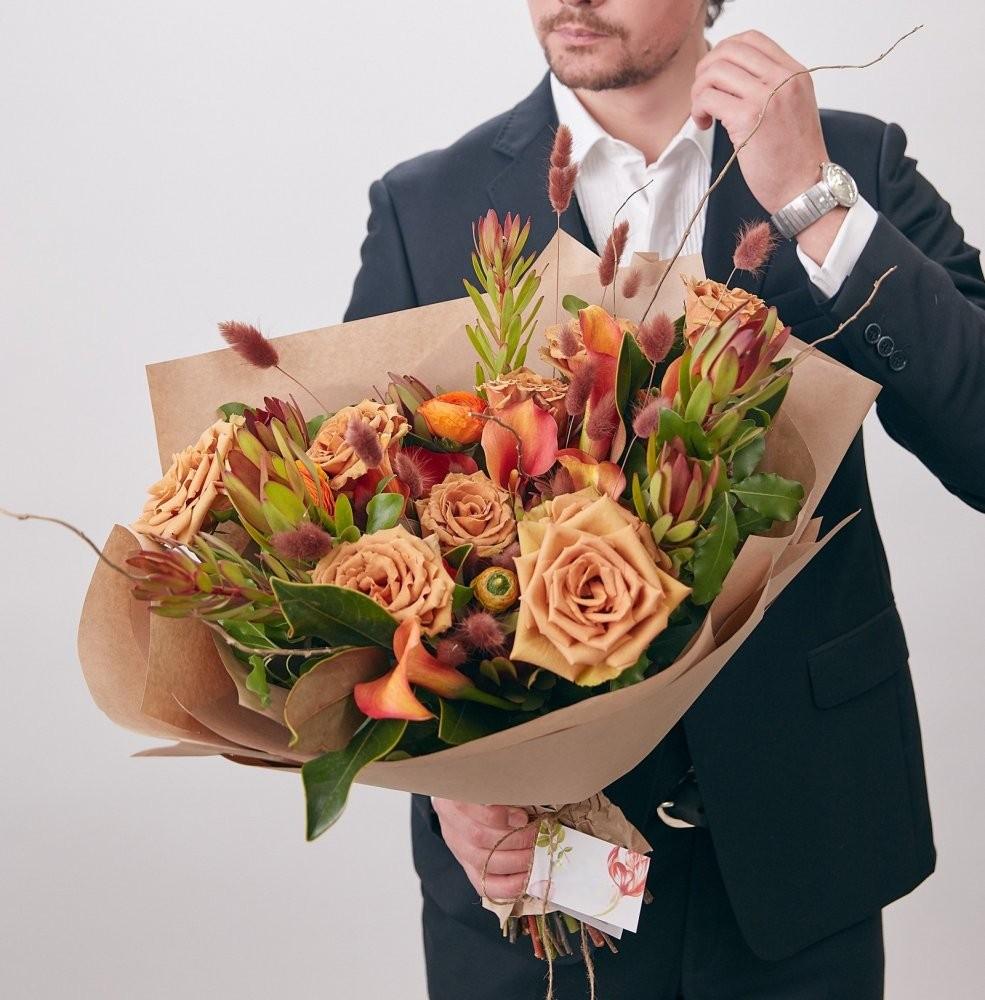
arranged "spiral-style," where each flower "looks" towards the center of the bouquet. A Japanese person would prefer a bouquet arranged according to the rules of ikebana – all elements in the bouquet should be asymmetrical and represent a compositional triangle: sky, earth, human.
Let's not forget about the special "language of flowers."
Europeans are not very strong in this area, but an Eastern person "reads" flowers like a book, so creating a bouquet, for example, for an Egyptian, requires special attention. Experienced florists who use exotic flowers (strelitzias, orchids, anthuriums, or amaryllises) recommend using the European scale of color meanings. For example, red is the color of a confident leader; yellow is the color of knowledge and openness; blue is the color of experience, wisdom, and calmness.
Also, business etiquette does not go well with wildflowers. So, no bouquets of small lilies of the valley, fragrant peas, cornflowers, and other "wild" flowers!
Business floristry adheres to rules dictated by etiquette and common sense. This includes the mandatory presence of a business card, the absence of decor in the form of sequins and ribbons, and the use of "non-distracting" odorless flowers. It is not advisable to give a business partner flowers with long stems – a compact bouquet is much more convenient to give and receive. Of course, flowers with a strong scent should never be given. Everyone has different senses of smell, and a bad mood is unlikely to make business negotiations successful.
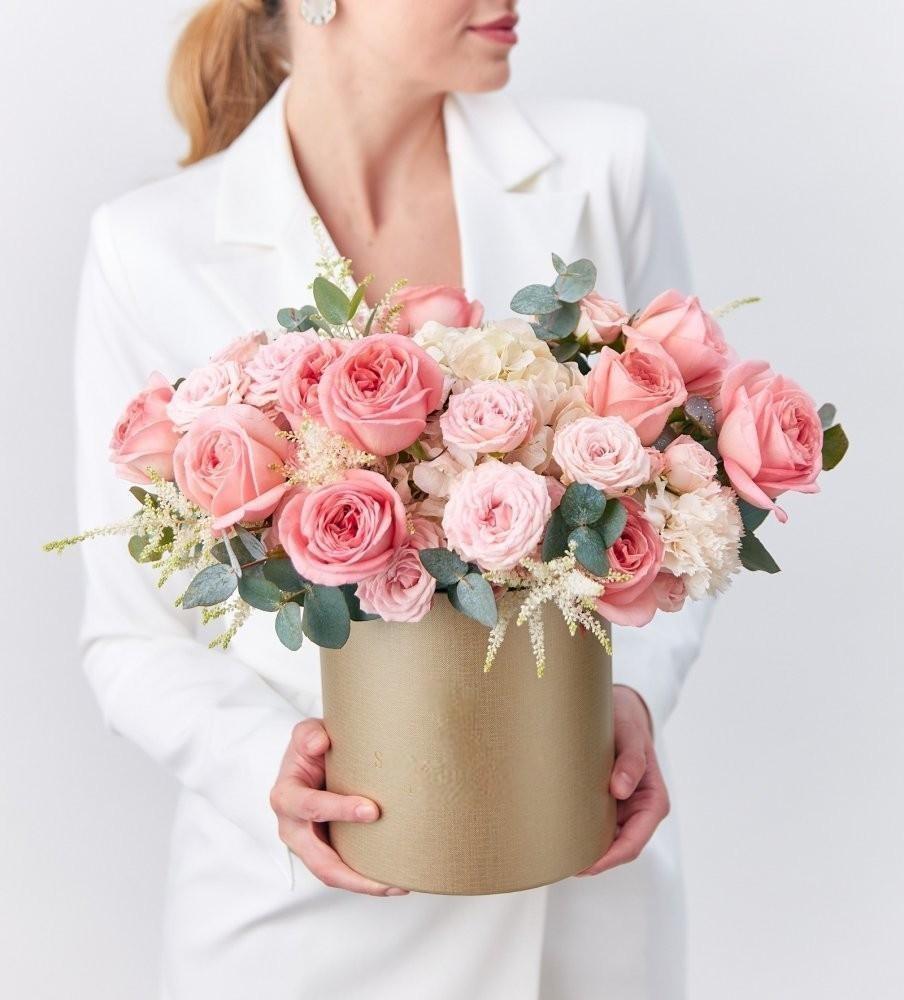
A business bouquet should also adhere to three "nots": not wilting, not scratching, and not catching on clothing.
But rules are rules, and each individual case requires a florist's creative approach, and the bouquet can be arranged differently depending on the character and age of the business partner. Bright colors and avant-garde bouquets or arrangements would be suitable for a young and dynamic company leader, while a more reserved, conservatively arranged bouquet of traditional flowers (roses, gerberas, orchids, carnations, or chrysanthemums) would be better for a solid, "mature" partner. A combined bouquet or one consisting of floral shades would be suitable for a lady. Unisex bouquets are appropriate when it is unknown who will lead the negotiations.
Like any other gift, flowers should be beautifully packaged. Tastefully decorated, practical, non-"creaky," and non-bulky packaging will complement the pleasant impression of the gift. Before presenting the bouquet, only the artistic packaging should be left on it, and the cellophane should be removed.